The bridge to success: Breaking through the barriers to higher education
As students plan on continuing their educational journeys, many face the reality of adjusting academic aspirations with financial burdens. This is where financial aid plays a fundamental role in allowing high school students to pursue higher education, with 87.3% of incoming first-year college students receiving financial aid this year, according to a report from the Education Data Initiative.
A 2024 study found that the average tuition and fees increased from $2,780 to $4,050 between 1994-95 and 2024-25 for public community college or technical college, from $5,740 to $11,610 for public four-year in-state students and from $24,840 to $43,350 for private nonprofit four-year students attending college. With the rising costs of tuition and additional expenses, financial aid programs can determine whether students will continue their education or decline the opportunity entirely.
“College is not like how it was a couple years ago, where it could be more affordable for you to even consider an out-of-state school. Tuition rates have increased throughout the years,” Cedar Shoals High School college counselor Andrea Rodriguez-Lopez said. “That’s where scholarships come in, and that’s where (a program) like QuestBridge that’s able to pay off the majority of your tuition, your room and your housing is a really great opportunity.”
QuestBridge is a non-profit organization among thousands that offer scholarships that allow high-achieving low-income students to access prestigious post secondary institutions. Founded in 1994, the program requires applicants to earn primarily A’s in rigorous courses, demonstrate a high literacy level and typically come from a household with a maximum annual income of $65,000.
QuestBridge applicants must submit two teacher recommendations, financial information, test scores and their high school transcript. Questbridge has 55 college partners in total, allowing applicants to rank up to 15 of their top schools. If students “match” with one of their top schools through the National College Match, they are awarded a full four-year scholarship to a top college in the U.S.
In the 2024-25 school year, four students from Clarke County School District, two from Clarke Central High School and two from Cedar Shoals High School, were awarded the QuestBridge National College Match Scholarship.
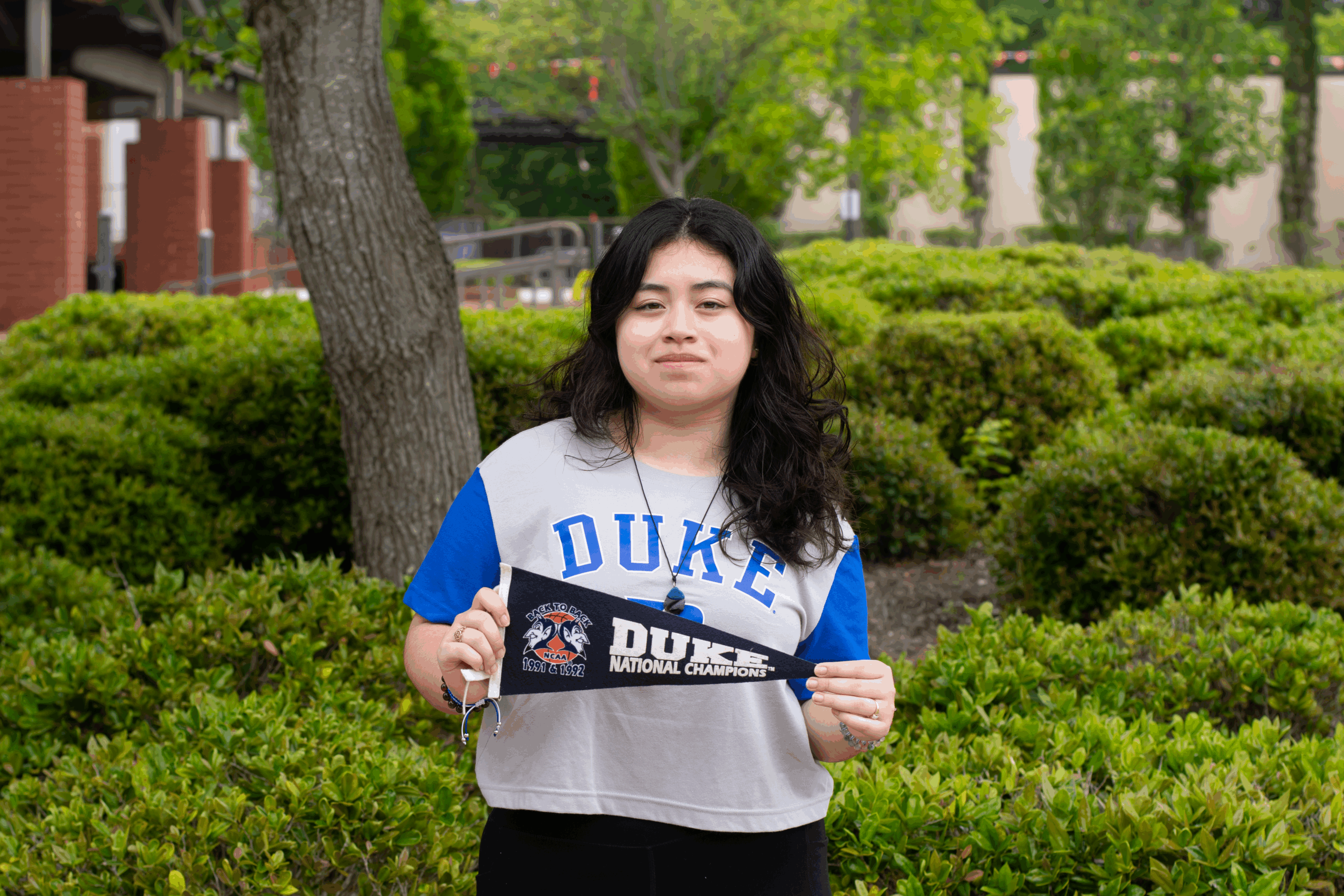
Senior Delia McElhannon is a first generation college student who was initially not planning to apply to the National College Match Scholarship. However, Rodriguez-Lopez told her to apply for it a few days before the deadline. After becoming a finalist, she ranked Duke and Cornell as her two top choices, ultimately being accepted into Duke.
“Being able to go to college without the worry of having to pay for your college experience is amazing,” McElhannon said.
“I am the first person to attend college in my family. I had literally nothing to go back on as reference (for college applications), so QuestBridge really does help out by giving hope and giving a lot of information on things you might expect and things you need to do,”
While McElhannon is grateful for Questbridge’s assistance in pursuing postsecondary education, she was surprised about the student contribution requirements. These include direct costs for tuition and indirect costs for supplies and books. Many partner universities require students to pay between $1,000 and $5,000, either through work study or student loans.
As a full-time dual enrollment student at the University of Georgia, she remains involved in softball, Beta Club, and FFA at Cedar Shoals.
Although many students work and study, some applicants are unaware of this and may feel overwhelmed.
“On (QuestBridge’s) website they explicitly state your books and supplies are covered, but it’s not true, because what they don’t say is that they’re covered because (you) have to work for them. It does depend on the college, like in my case I’ll have to work for them, but in another college it may not be that way,” McElhannon said.
Approximately one-third of all college students in the United States are first-generation, according to data from the National Center for Education Statistics. A study conducted by Jessica He, a student at the University of Warwick, indicates that first-generation students aiming for higher education face challenges that include “academic preparedness, transition to university life, financial barriers, family dynamics, social and cultural integration.”
Senior Genesis Rodriguez-Hernandez, a first generation college student from CSHS, received referrals from teachers and mail from QuestBridge providing information about the National College Match Scholarship. She still wasn’t sure if she wanted to apply for it. However, after the college counselor recommended the program to Rodriguez-Hernandez during her senior meeting, she applied the day of the deadline and became a finalist.
“It happened by chance. At first I didn’t think I was going to apply because it was so farfetched. I had to try at the last minute to get teacher recommendations and do a video. It’s really crazy the way things turned out,” Rodgriguez-Hernandez said.
High school counselors are a common source for raising awareness about financial aid, scholarships, and programs. A 2023 report indicated that students who had met with a high school counselor about financial aid received need-based college grants more than students who had not met with a counselor.
Rodgriuez-Lopez recommended the National College Match Scholarship to many seniors, which led her to assist Rodriguez-Hernandez in applying for it.
“It really takes saying ‘I’m searching for these things (and asking for help).’ Reach out to your teachers, reach out to your counselor, (and) people will direct you to the right places,” Rodgriuez-Lopez said.
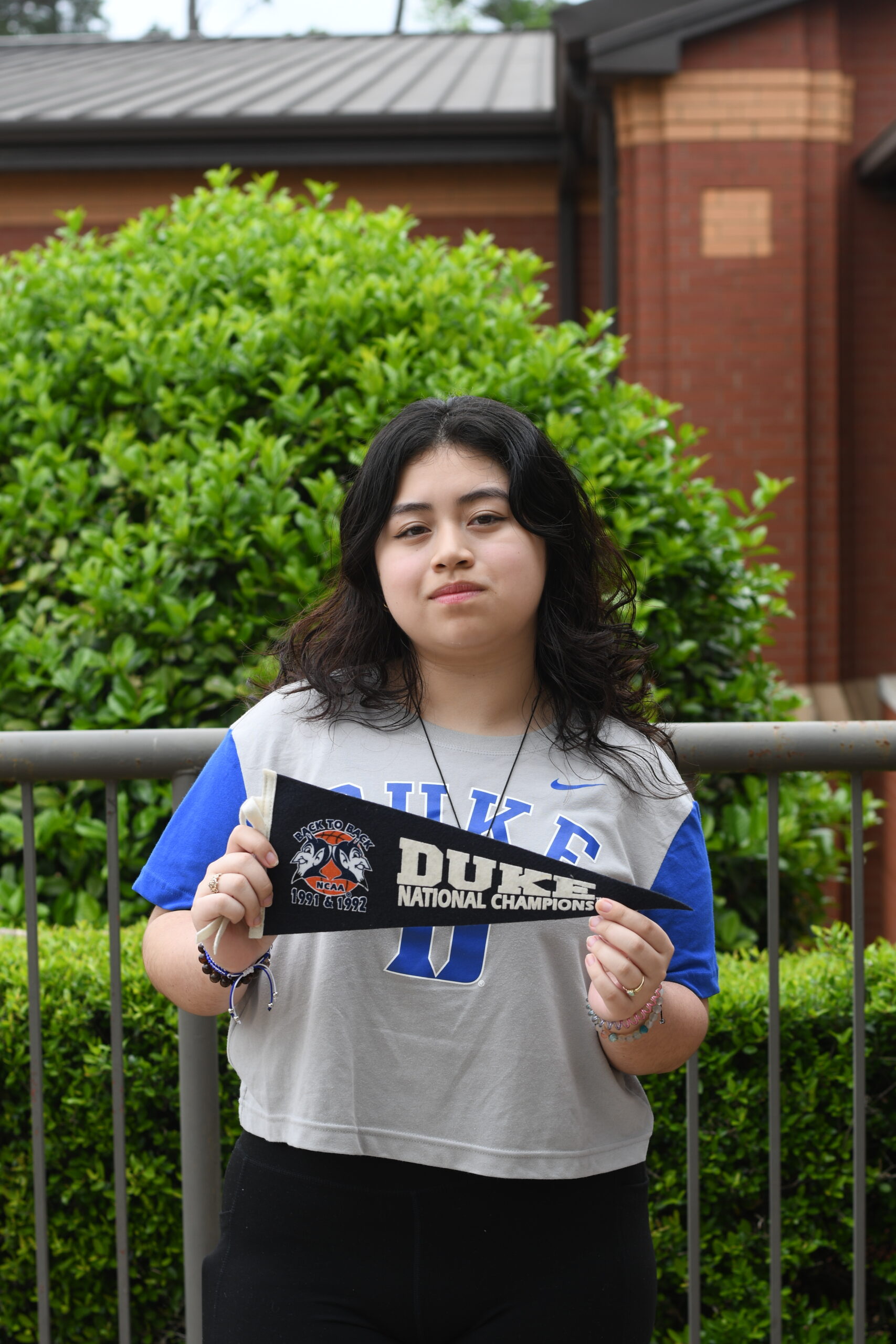
Rodriguez-Hernandez ranked more than 10 colleges in her application. Her top three were Emory University, Duke University and the University of Pennsylvania. Rodriguez-Hernandez was eventually accepted into Duke.
“I am the first person to attend college in my family. I had literally nothing to go back on as reference (for college applications), so QuestBridge really does help out by giving hope and giving a lot of information on things you might expect and things you need to do,” Rodgriguez- Hernadez said.
A dual-enrolled student atUGA, honors and AP student, Rodriguez-Hernandez is also involved in the Beta Club, orchestra and Georgia Possible, a program connected to UGA that facilitates local public school students to visit the UGA campus for activities, usually centered around teamwork, inspiring students to become leaders in their community.
The College Prep Scholars Program is a program associated with Questbridge that seeks high-achieving high school juniors from low-income backgrounds with knowledge, confidence and resources to apply to top colleges. A total of 3,657 students were selected as 2025 College Prep Scholars, according to a report from Questbridge.
Senior Adrian Rangal is a first generation student at Clarke Central who matched with Princeton University. Rangal’s process with QuestBridge also began during his junior year when he applied to the Questbridge College Prep Scholars program, which helped him start his National College Match application in the beginning of his senior year. Rangal was notified he became a finalist in October, and finally found out he matched to Princeton in December.
“Throughout my educational journey, I faced the problem of concern regarding the affordability of college. I faced a lack of academic resources compared to other students aiming for top schools,” Rangal said. “Receiving (the National College Match Scholarship) has made an education possible for me and many others; it has changed my life.”
An AP and honors student, Rangal has also taken 1 college-accredited course. He believes being involved in your community is crucial. Rangal is currently the president of Clarke Central’s Future Business Leaders of America chapter and captain of the academic team. He has also volunteered with many organizations such as Make-A-Wish and has attended summer programs at UGA and the University of Pennsylvania.
A report from the College Board found that the number of Latino students participating in AP courses increased 83% from 2014 to 2024. This results in 18% of Latino high school students participating in AP in 2024. Just 14% of Latino high school students participated in AP in 2014.
With the rising number of Latino students participating in AP, students like Rangal show how access to educational resources and community involvement can lead to better opportunities for students in diverse backgrounds.
Clarke Central senior Kevin Capcha is a Peruvian first-generation student who initially was also accepted into the 2024 College Prep Scholars Program, which led him to apply for the National Match Scholarship.
After becoming a finalist, Capcha ranked three colleges: Massachusetts Institute of Technology, Stanford University and the University of Pennsylvania, ultimately matching with Stanford.
“(My acceptance to Stanford University) definitely feels surreal, because when I step onto Stanford’s campus, it’s not only going to be the culmination of all my hard work, but also the sacrifices my mother has made over the past 24 years,” Capcha said. “I didn’t really have anybody there to kind of help me when I was taking gifted courses or advanced level courses but at Stanford, that’s going to be the complete opposite. There’s going to be teaching assistants, office hours, and a bunch of other resources and I have to learn how to use them”
By the end of Capcha’s senior year, he will have taken more than 10 AP classes. Capcha has already worked and studied as a MITES Semester Scholar (MIT Introduction to Technology, Engineering, and Science) and a research assistant at UGA.
Capcha believes that writing your college essays uniquely takes an important part in your college applications, no matter if other requirements aren’t perfect.
“As long as you’re unique with your story, tell that story, it will take you very far, no matter what you might think you lack compared to other applicants. That’s the beauty about those programs (compared) to the actual college admissions process. They truly do take everything into a holistic approach, so tell your story and take your chance.” Capcha said.