Emphasizing the hold of electronics: The impact of technology on young adults
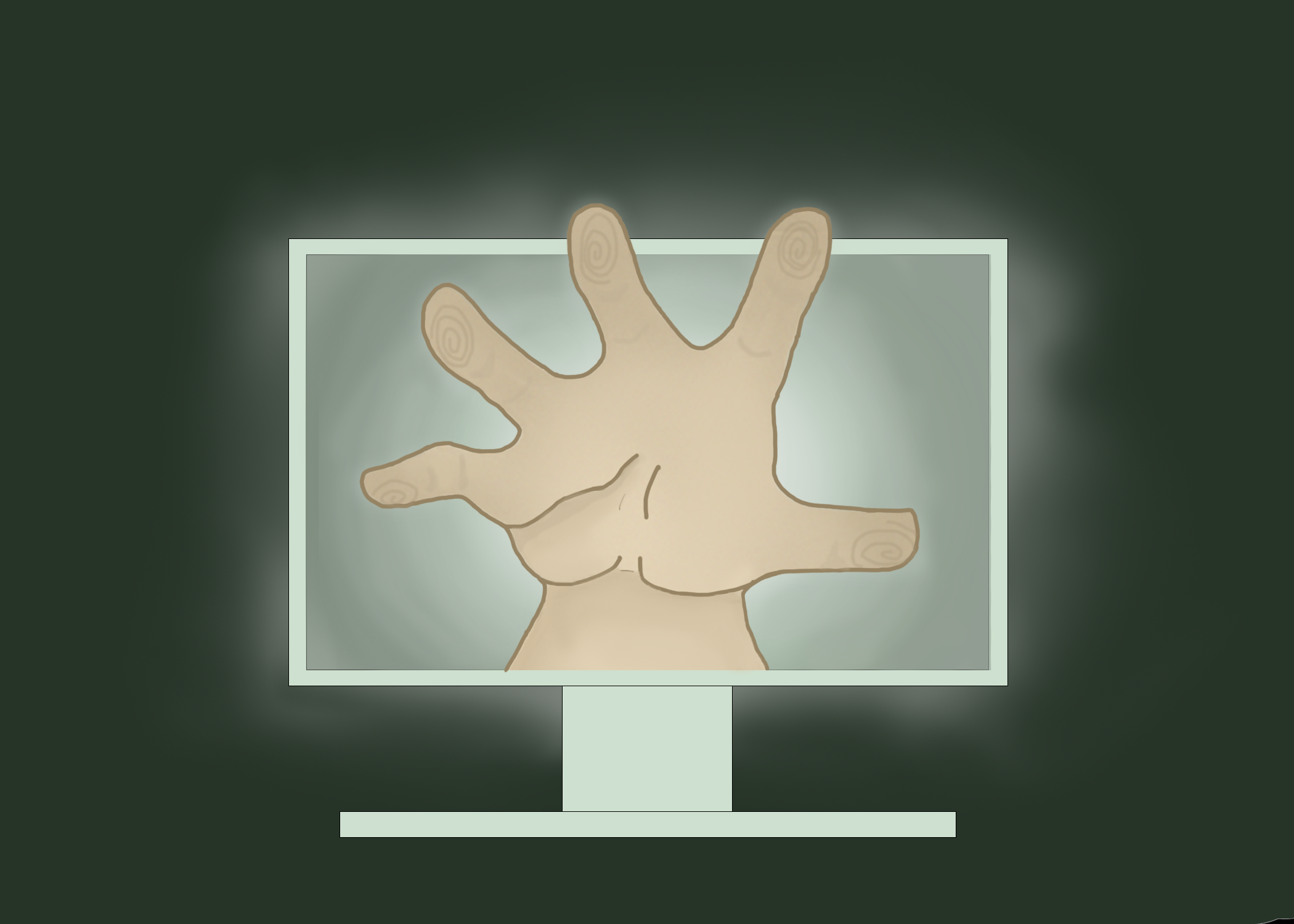
Electronics have such a big grasp on the world. When I hear stories of earlier times from my family members, it’s shocking to think about how quickly things change and adapt. My parents reminisce about times where people were not “glued to their phones.” When I was younger I was frustrated by this saying even though it was completely logical and true; technology does have a strong grasp on people.
I was not an iPad kid, but a Kindle kid. Hypnotized by the screen, both my parents and subconscious told me I was falling under the spell of the internet, but I had already grown dependent on the electronic glow.
According to a study performed in Jan. 2020 by the Centers for Disease Control and Prevention(CDC), kids from ages eight to 10 spend an average of six hours a day on electronics.
I invented time to bathe in the glow of the screen longer, staying up past my limits and losing hours of rest. My sour attitude sculpted by sleep deprivation rubbed off on my loved ones around me; one of the first warning signs. Even though managing screen time is something many people go through, the implication on my life is still important to discuss.
According to a study published by Statista in 2021, 88% of kids ages 8-18 grew up alongside smartphones. This doesn’t mean that they were used for hours on end, but instead stresses the commonality of electronics at a young age.
Something that is important to consider is family status. Different familial settings require different levels of assistance, which electronics are able to provide. Some kids require guidance when they are learning, but not every household can provide that level of support due to the conditions they endure. This is where electronics can be a support system.
By having electronics from a young age I could not separate when I needed to focus or relax, so the line began to disappear, making it even more difficult to focus. I wouldn’t do anything without having some video by the side.
Slowly, I began to realize that the grasp of the entertainment system is polluting people’s lives.
For myself, my screen time worsened during the COVID-19 pandemic as it did for many kids. Noted by a study from the National Library of Medicine, during the first pandemic period, entertainment screen time was increased from 3.5 hours to a .89 hour rate.
I noticed that the pandemic caused two major changes in my behavior; an increase of time spent on screens and a decrease of time spent outside. Though my house was surrounded by woods, I found myself consumed by the endless scrolling and games on my screen, it seemed easier. I was spending time outside, but the state of solitude had a serious effect on me.
My depression and anxiety fed off of my isolation and increased time spent in my room with electronics. I would feel glued to my bed, with little motivation to push through the day. But it wasn’t just myself fighting through this. People all across the world felt the burden of the pandemic in diverse ways.
My response to retrieving electronics for a space to lose track of time created an unhealthy relationship. I would associate comfort with the glowing light of a screen. Because I had adapted to this routine while I was building my routines, these toxic habits would stay with me.
This created an endless cycle. When I felt upset, I retrieved my computer which only fueled my negative emotions. I noticed that my experience of increased emotional distress worsened while spending long periods of time online. However, this was what I noticed after it happened.
While I was online, I wanted to turn my electronics off, but I just couldn’t bring myself to do it. This is known as a freeze state; where the body can feel physically and mentally stuck, creating a difficulty for getting off my computer. I had created a relationship that created hours of continuous screen time.
Young minds’ dependence on media raises serious public health issues because it is capable of harming cognitive, linguistic and social-emotional growth.
A study from 2023 on the Effects of Excessive Screen Time on Child Development provided by the National Library of Medicine explains that long periods of time in front of screens can worsen multitasking, executive functioning and academic performance.
The dependency of electronics creates a multitasking environment, one which I am all too familiar with. I would prop up my phone to watch a movie while working. I knew it slowed my work pace but I couldn’t bring myself to put it down.
This action would prolong work. I would find myself working on homework for hours at a time while distracted by a video. Eventually I would realize I was not able to complete the assignment to my full ability with a distraction. So I would end up turning the screen off, after all the time went by.
I would complete my work, but at the cost of continuing a routine that always brought me down. But some people in these difficult situations find aid and comfort in Artificial Intelligence (AI) to finish work.
In recent years with AI growth, people have turned to Chat-GPT for help when schoolwork got difficult or even from the start. This is one of the disadvantages of being online. Chat-GPT itself is not the issue, it’s the specific use people choose.
When kids become dependent on an AI, it can put a roadblock towards their future by getting in the way of their working process and habits. Leaning on AI as a substitute for work can prevent you from achieving the fullest possibility of accomplishments.
That’s what technology is capable of. Depending on how one can handle and understand the effect electronics have on your mind, the usage can change your habits. That is why I think kids have great trouble with extreme usage and reach for stability of electronics.
It’s a source of comfort, and it’s not easy to break a cycle. However there are skills to help break it such as; timers to limit screen time, communicating difficulties with people around you, and scheduling phone checks. These small changes can end up making big shifts in your behaviors. Often, what you’ll discover is that many kids struggle with balancing and controlling their screen time.
Discussing and learning from one another’s experience helps you learn and make decisions towards how you can handle future choices. It’s a cycle that you will most likely have to face again and again. Facing these challenges repetitively gives you numerous opportunities to try again. You have the opportunity to change the way you act and respond to experiences.