
Voices unheard: how education policy fails to protect the student press
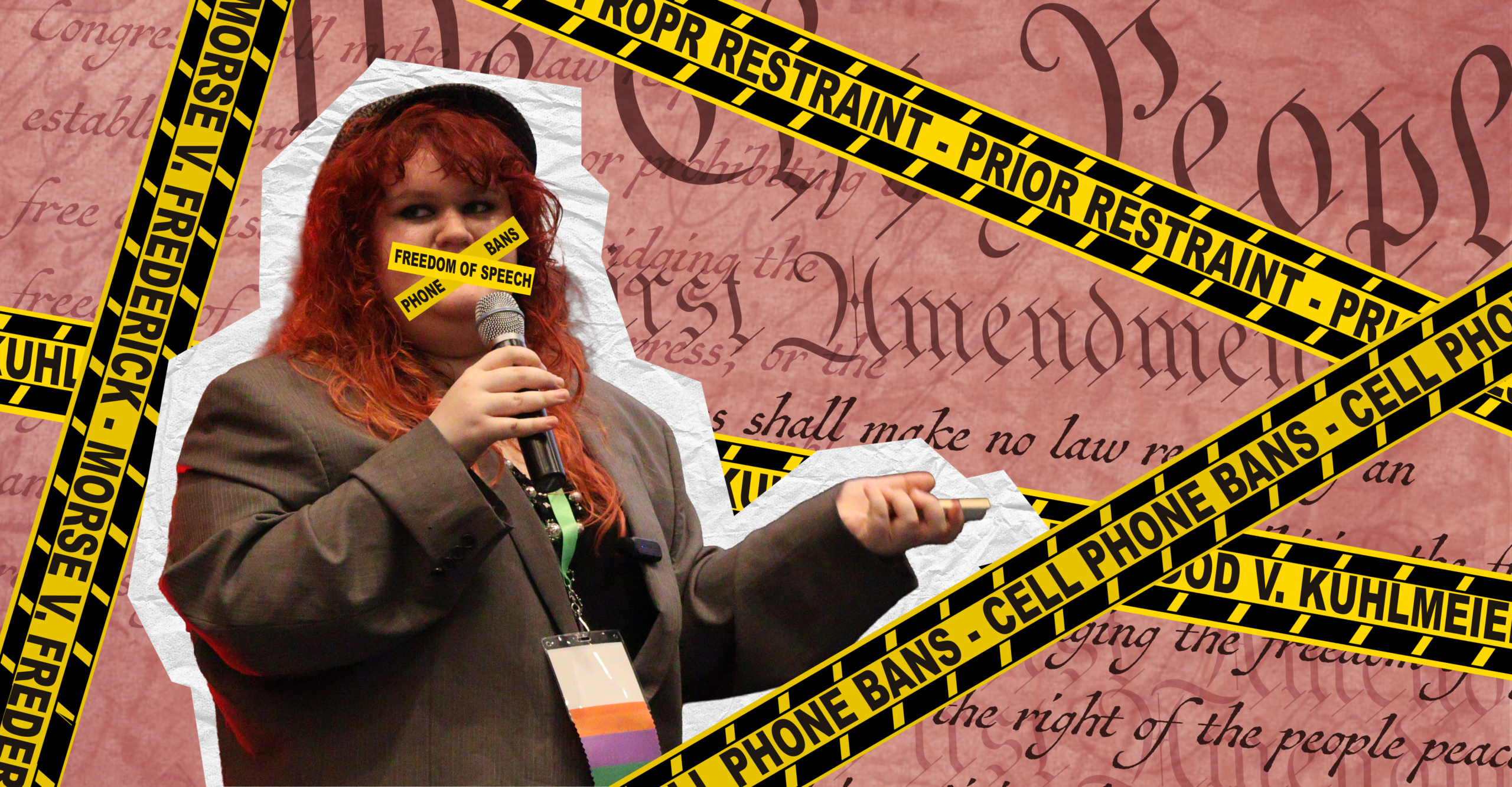
On Jan. 14, 1988, the Supreme Court delivered a ruling in the pivotal case of Hazelwood v. Kuhlmeier. In this case, the court ruled that school administrators have the power to limit articles in student publications. Additional cases such as Morse v. Frederick limiting student speech related to drug use and New Jersey v. T.L.O. allowing unannounced searches in schools has further limited the rights of students. Restrictions to student freedom affect all of us, but especially student journalists.
One example of this is the proliferation of school phone bans. 27 states have implemented “bell-to-bell” phone bans which ban phones for the entire day, and an additional eight have adopted less strict limitations.
These policies are the subject of heated debate in Georgia. There is a bell-to-bell ban active in middle schools, and a bill extending that policy to high schools passed the state house and is headed to the senate. These phone bans are centered around the South, with every southern state having a full or partial ban. Rozalia Finkelstein is a co-editor in chief at Theogony at Alexandria City High School in Alexandria, Virginia. While Virginia has a bell-to-bell cell phone ban, Finkelstein has still noticed a reliance on phones.
“We’re using our phones every day for class … So officially phones are banned, but they’re also part of our day to day life, and they’re part of the curriculum, things beyond us. When we interview people, we have to use the voice recorder on our phone,” Finkelstein said.
Although phones can create issues within traditional classrooms, they serve a valuable role in scholastic journalism. Within our own press room, we use phones to record interviews, communicate with sources and create and post social media content. Phone bans often fail to account for this, and can restrict important tools for student journalism. Morgan Davis is a member of the CavPlex Media program at Richland Northeast High School in Columbia, South Carolina. She finds it difficult to work around their state’s bell-to-bell ban, particularly when it comes to social media promotion.
“It’s definitely difficult, especially if we need social media in class. The second we publish a story, we want to post it on social media to promote it and have people come and look at it. Right now we can’t really do it in class, and it’s just hard to manage outside of school,” Davis said.
Cell phone bans have affected advisors as well as students. Although Theogony advisor Kamilah Lawson hasn’t yet faced issues with her students using phones in class, she has not received any formal permission from school officials.
“In the newsroom, you need every resource available. So far, no one has bothered our class. They understand that we need our devices to record and set up interviews,” Lawson said.
Phone bans represent just one way scholastic journalists are left out of administrative decisionmaking. Many student journalists cannot access Instagram or Facebook to post content or Flickr to organize photos, requiring the use of personal devices. Sydnee Turner is also a member of CavPlex Media. She often uses X to cover school events, and has struggled to do so with the phone ban.
“It makes it pretty hard to cover certain events like pep rallies and things like that. We live tweet a lot of our events, and that makes it pretty difficult,” Turner said.
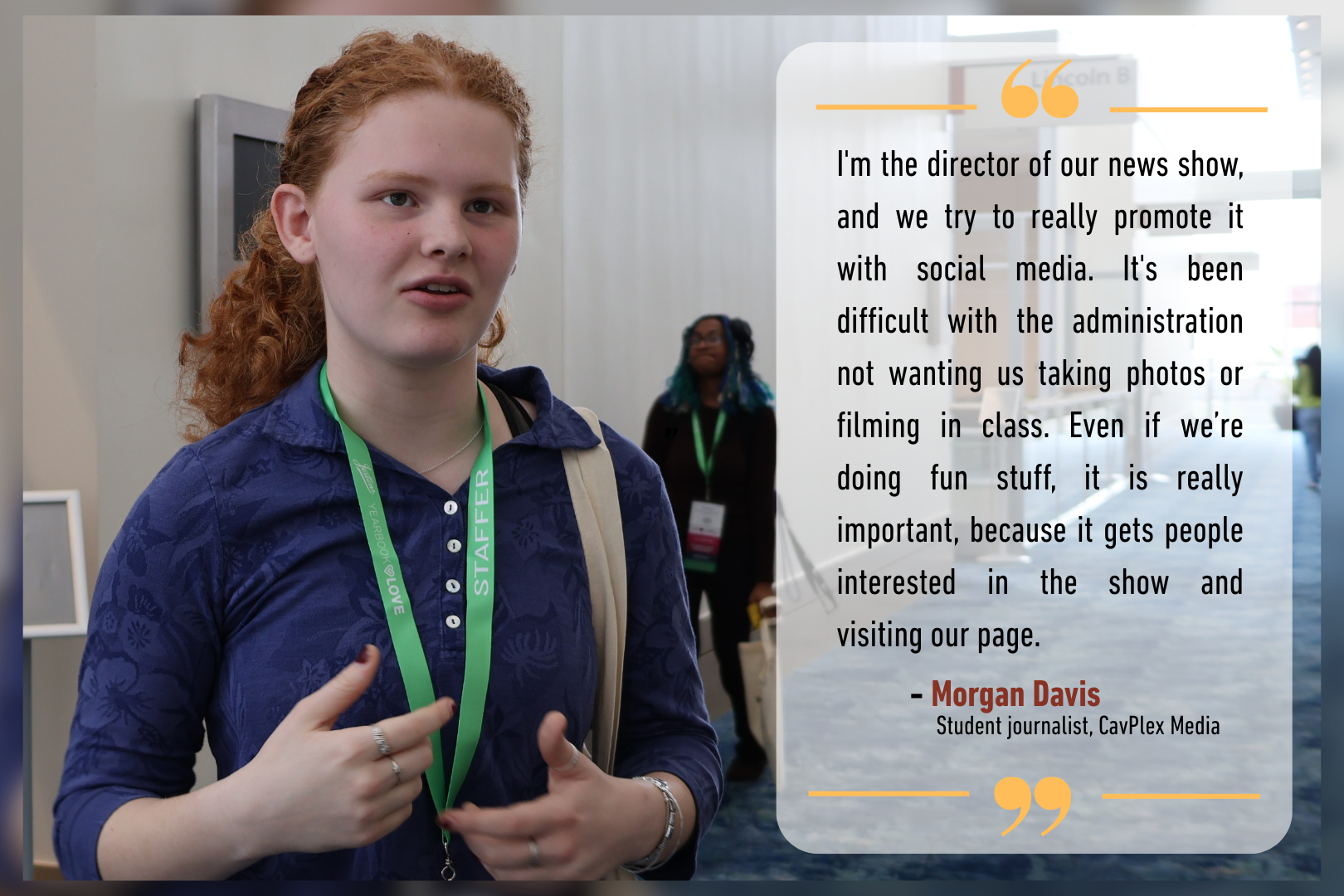
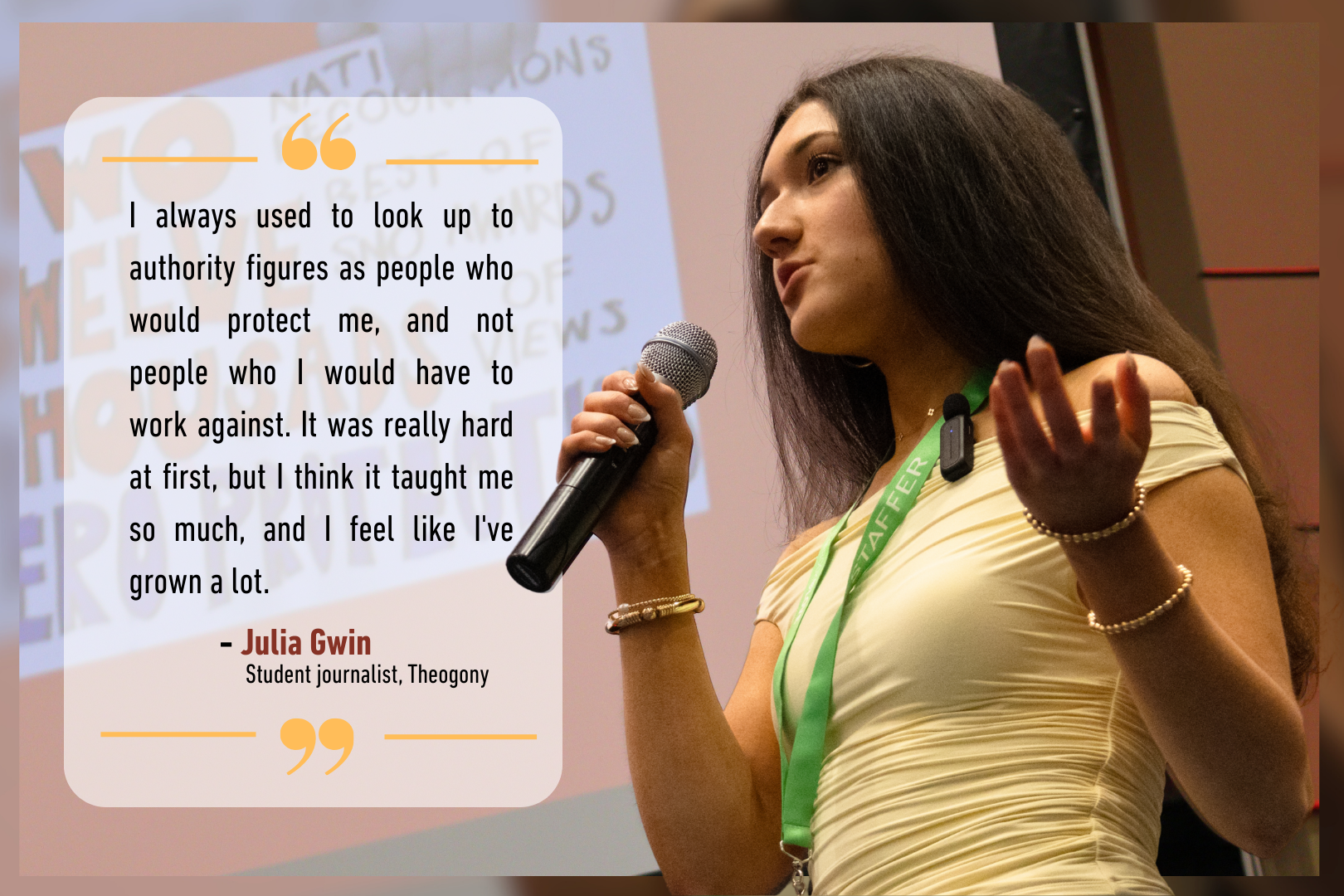
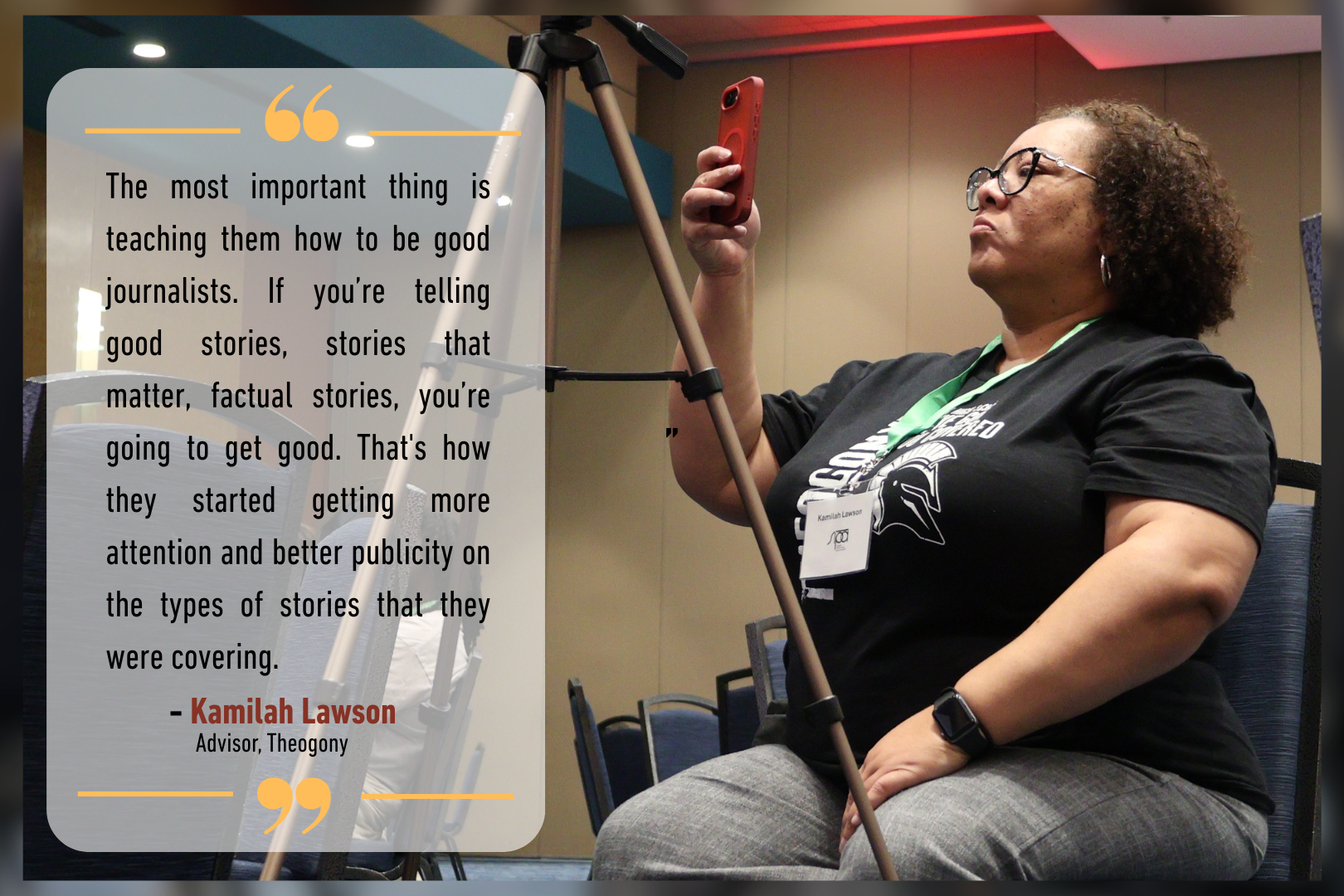
UNSILENCED: Journalism students and advisor share their advice and experiences around the topic of repression of Scholastic Journalism speech and rights. Graphic by Aislynn Chau.
One reason this phenomenon has grown is the lack of modern rulings from the Supreme Court, which has not changed its overarching precedent on scholastic journalism since Hazelwood v. Kuhlmeier in 1988. In the nearly 40 years since, how students report, to the topics reported on and the ways content is published has changed.
In reaction to these restrictions on student journalistic activity, a movement known as New Voices has pushed back. New Voices is a student-led nonpartisan movement that seeks to override the ruling of Hazelwood v. Kuhlmeier. Their signature legislation establishes rights for student journalists and advisors, including freedom to choose their own topics, blocking prior restraint and preventing punishment for reporting. These laws have been passed in 18 states around the US. However, the only southern states who have New Voices laws are Arkansas and Maryland.
As a part of Theogony, Finkelstein helped fight to protect student press rights. In 2024, they published a series of investigative articles about the school district’s controversial handling of their school. Their school district then rewrote their policy on student journalism to allow school officials to review and prevent the publishing of any article. After a long fight, they prevented the passage of the new policy and secured their freedom of press rights. Finkelstein believes New Voices laws are crucial to prevent the type of situation they went through.
“If you lack New Voices protections it’s much harder for students to report on things that the school district doesn’t want you to. In our experience, we were not censored for reporting on cell phone bans. However, if you have a school where they don’t want you talking about it, and you publish an article on it, they can make restrictions and block that,” Finkelstein said.
Georgia’s State Legislature has just finished the portion of their 2026 session in which new bills can be submitted, and no legislation protecting student journalists was introduced. Despite having an active New Voices chapter, Georgia has not made any significant progress in student journalism rights. In her time being a part of the Odyssey Media Group of Clarke Central High School in Athens, Georgia, print editor-in-chief Liza Larson has had difficulty working around unclear district policy towards her publication.
“With no legal protection from the state or national level, we had to develop our own communications policy with the district and that was a huge time stop. Especially since it hasn’t been looked over by our school board, so it’s technically still a guideline and not a policy. There’s a lot of gray area about what we can do. I’m always kind of tiptoeing around and trying not to get in trouble with our superintendent or our director of communications. It’s really impeding on our ability to talk to the people we want to talk to and write the story,” Larson said.
As the only publication covering school events, scholastic publications can act as the voice of the student body to our greater communities. By passing a school phone banning bill and not considering New Voices laws, the Georgia State Legislature may not be giving fair consideration to student journalists.
While the current protections for scholastic press are limited, awareness of the issue is growing. Major organizations have issued statements of support for the movement, including the American Bar Association, the Journalism Education Association and the American Society of News Editors. With support from these groups, New Voices bills are active in six states.
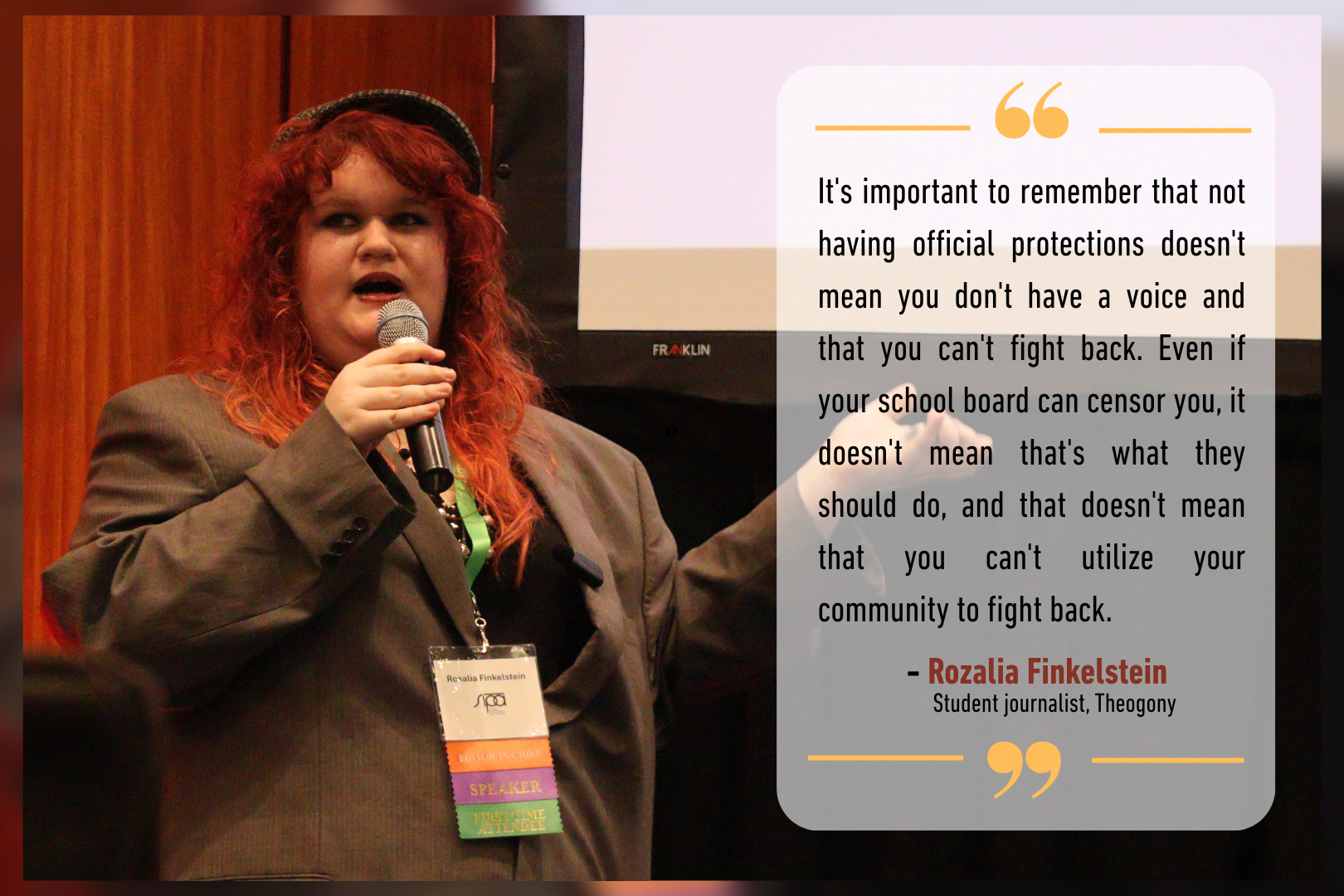
As the only region without any pending or passed New Voices legislation, it’s important that the South considers this legislation. Simple actions like getting in touch with your state New Voices chapter or showing support for them to your state legislators can encourage change. Finkelstein believes that using your voice and collaborating with your community is the key to positive change.
“It’s important to remember that not having official protections doesn’t mean you don’t have a voice and that you can’t fight back. Even if your school board can censor you, it doesn’t mean that’s what they should do, and that doesn’t mean that you can’t utilize your community to fight back,” Finkelstein said.
LEGISLATIVE LEEWAY: The map above shows southern states and the information surrounding their laws concerning phones in schools and New Voices legislation. Map by Lilly Cohen. Source: https://www.campussafetymagazine.com/insights/which-states-have-banned-cell-phones-in-schools/161286/


