A seat at the table: gerrymandering affects your representation
According to the Princeton Gerrymandering Project, Georgia’s current congressional maps are severely gerrymandered. The independent organization gave the maps an ‘F’ grade for severe racial bias, estimating that in an election with a perfect 50/50 split between the two parties, Republicans would win by 14%. They also gave the State Senate maps an ‘F,’ with a 9% Republican advantage.
Gerrymandering is the process of deliberately drawing election districts to give a particular candidate or party an unfair advantage. The process allows representatives to choose their voters rather than the other way around. As a result, representatives may no longer feel pressure to appeal to their constituents and are thus more likely to follow their own interests.
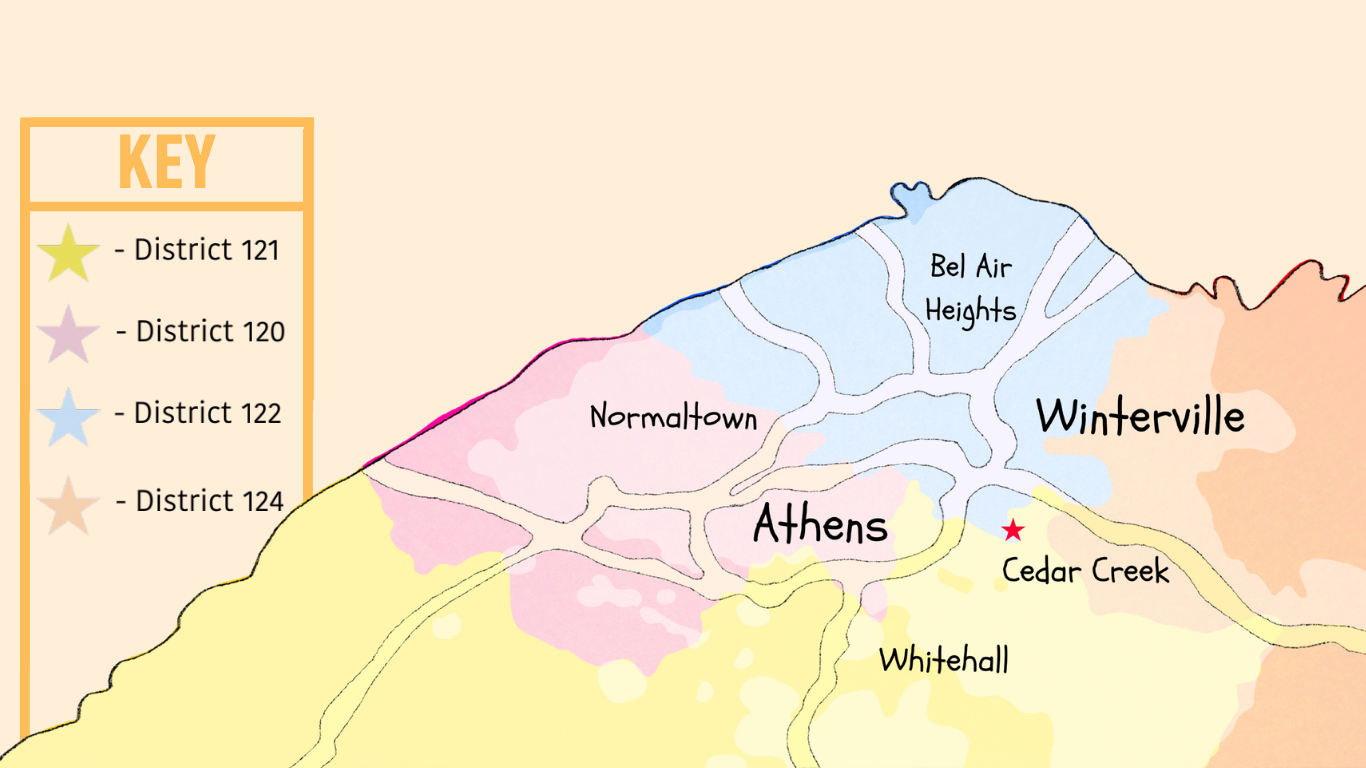
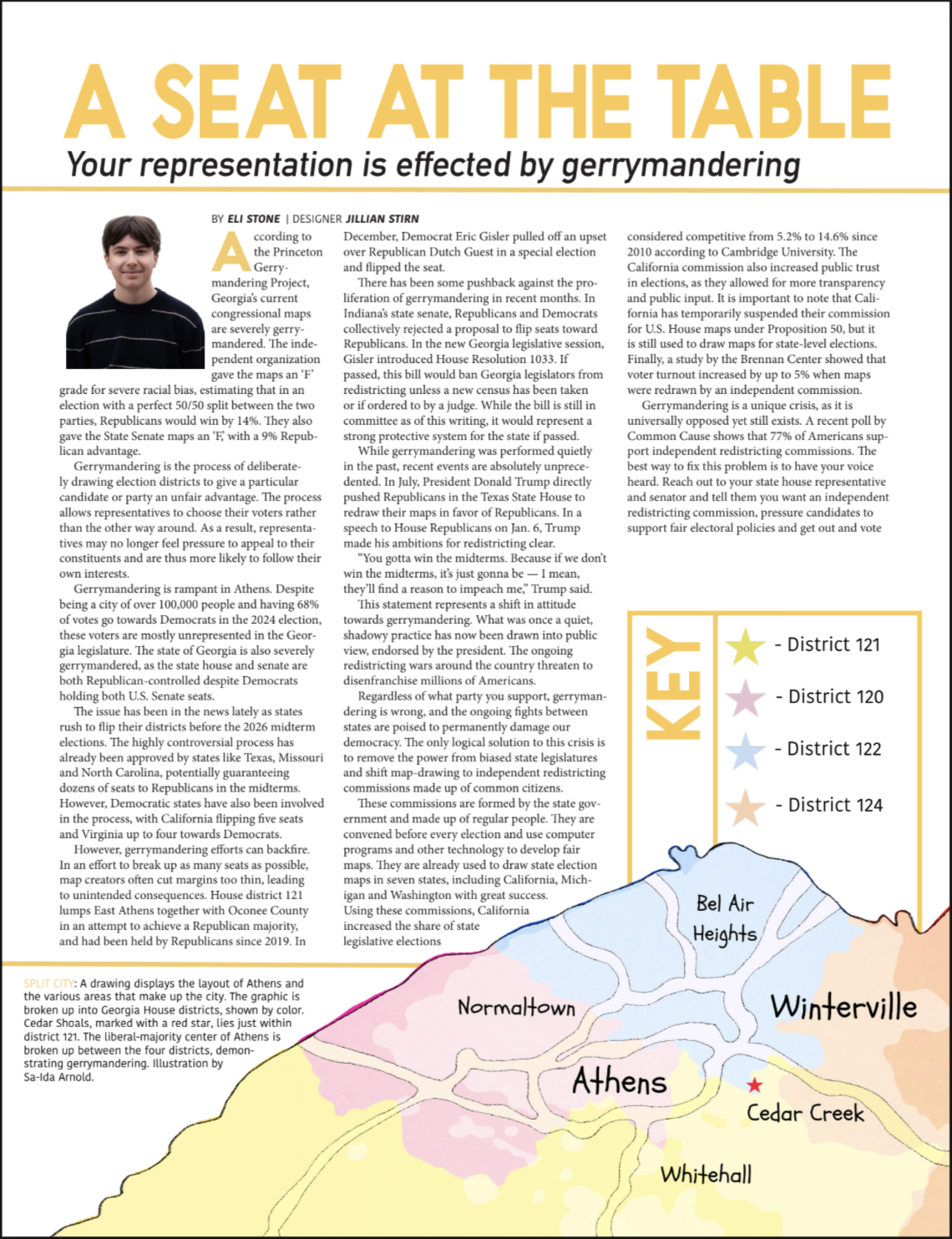
Gerrymandering is rampant in Athens. Despite being a city of over 100,000 people and having 68% of votes go toward Democrats in the 2024 election, these voters are mostly unrepresented in the Georgia legislature. The state of Georgia is also severely gerrymandered, as the state House and Senate are both Republican-controlled despite Democrats holding both U.S. Senate seats.
The issue has been in the news lately as states rush to flip their districts before the 2026 midterm elections. The highly controversial process has already been approved by states like Texas, Missouri and North Carolina, potentially guaranteeing dozens of seats to Republicans in the midterms. However, Democratic states have also been involved in the process, with California flipping five seats and Virginia up to four towards Democrats.
However, gerrymandering efforts can backfire. In an effort to break up as many seats as possible, map creators often cut margins too thin, leading to unintended consequences. House district 121 lumps East Athens together with Oconee County in an attempt to achieve a Republican majority and had been held by Republicans since 2019. In December, Democrat Eric Gisler pulled off an upset over Republican Dutch Guest in a special election and flipped the seat.
There has been some pushback against the proliferation of gerrymandering in recent months. In Indiana’s state Senate, Republicans and Democrats collectively rejected a proposal to flip seats toward Republicans. In the new Georgia legislative session, Gisler introduced House Resolution 1033. If passed, this bill would ban Georgia legislators from redistricting unless a new census has been taken or if ordered to by a judge. While the bill is still in committee as of this writing, it would represent a strong protective system for the state if passed.
While gerrymandering was performed quietly in the past, recent events are absolutely unprecedented. In July, President Donald Trump directly pushed Republicans in the Texas State House to redraw their maps in favor of Republicans. In a speech to House Republicans on Jan. 6, Trump made his ambitions for redistricting clear.
“You gotta win the midterms. Because if we don’t win the midterms, it’s just gonna be — I mean, they’ll find a reason to impeach me,” Trump said.
This statement represents a shift in attitude towards gerrymandering. What was once a quiet, shadowy practice has now been drawn into public view, endorsed by the president. The ongoing redistricting wars around the country threaten to disenfranchise millions of Americans.
Regardless of what party you support, gerrymandering is wrong, and the ongoing fights between states are poised to permanently damage our democracy. The only logical solution to this crisis is to remove the power from biased state legislatures and shift map-drawing to independent redistricting commissions made up of common citizens.
These commissions are formed by the state government and made up of regular people. They convene before every election and use computer programs and other technology to develop fair maps. They are already used to draw state election maps in seven states, including California, Michigan and Washington with great success. Using these commissions, California increased the share of state legislative elections considered competitive from 5.2% to 14.6% since 2010 according to Cambridge University. The California commission also increased public trust in elections, as they allowed for more transparency and public input. It is important to note that California has temporarily suspended their commission for U.S. House maps under Proposition 50, but it is still used to draw maps for state-level elections. Finally, a study by the Brennan Center showed that voter turnout increased by up to 5% when maps were redrawn by an independent commission.
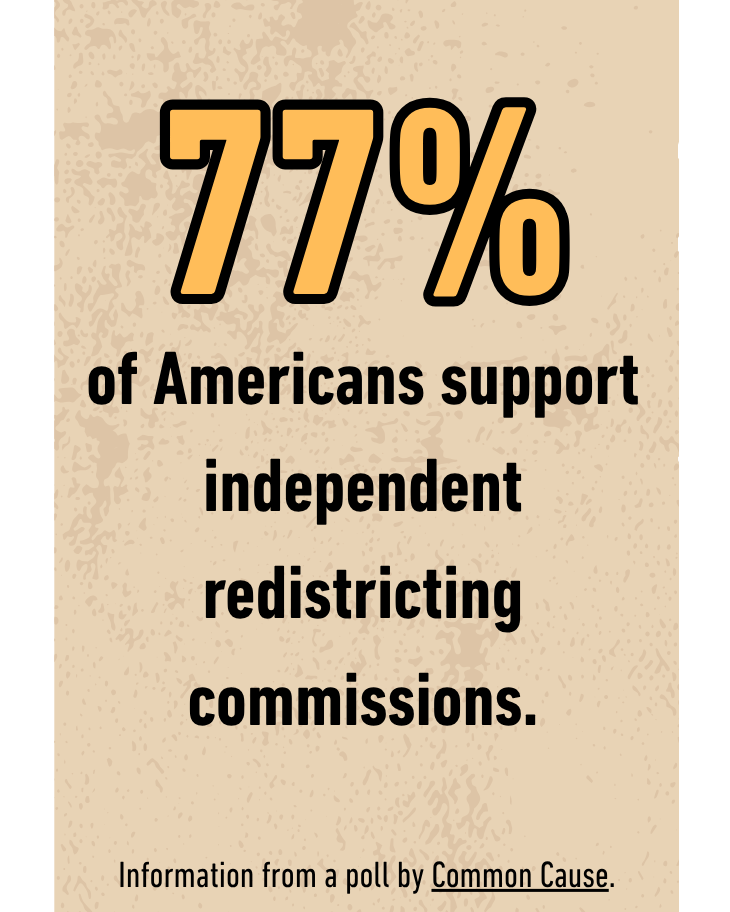
Gerrymandering is a unique crisis, as it is universally opposed yet still exists. A recent poll by Common Cause shows that 77% of Americans support independent redistricting commissions. The best way to fix this problem is to have your voice heard. Reach out to your state House representative and senator and tell them you want an independent redistricting commission, pressure candidates to support fair electoral policies and get out and vote for the candidates you believe in.