Developing learning ability: Cedar Shoals High School offers AP Seminar class
New this school year, Cedar Shoals High School now offers AP Seminar, designed to help students with researching topics and how to create writing projects and multimedia presentations based on evidence gathered, according to College Board.
Taught by English teacher Jasmine Taylor-Howell, the class focuses on a series of different topics, like culture and politics, to help students develop useful skills while allowing them to have freedom for what they want to learn about.
“AP Seminar is a pretty broad course. It’s about how to think and not what to think. The course teaches the essential college level skills of research, argumentation and communication. Unlike traditional classes, they get to choose real world topics that matter to them, and they get to analyze them from different perspectives and present their findings,” Taylor-Howell said.
This year is Taylor-Howell’s first teaching at Cedar Shoals High School. Growing up, she lived in Athens and attended Clarke Central High School. After moving back to Athens this year and getting a job at Cedar’s English department, she was offered the role of teaching AP Seminar.
“I had no idea of the existence of the course until principal Dr. (Makeba) Clark asked during my onboarding if I’d be willing to teach the AP Seminar class, which was a new course coming to Cedar,” Taylor-Howell said. “That required me to attend AP training this past summer. I went to Marietta for a four day workshop at Walton High School.”
The course focuses on critical thinking, conversation and developing arguments based on independent research. The class reads up to five texts per unit and students complete assignments such as discussion posts, mock presentations, mock reports and literary critiques.
Throughout the school year, students will submit two performance tasks. First is a team project and presentation, which is 20% of the students’ AP exam score. Second is an individual research-based essay and presentation, which is 35% of the student AP exam score.
At the end of the year, students will take the College Board’s AP Seminar End-of-Course Exam and Georgia’s high school literature Milestones exam for 10th grade.
“The (AP) exam of the course itself is structured in three parts. Performance task one, which includes the team multimedia presentation and the 1200-word individual research report, and performance task two, which is their individual multimedia presentation and the individual written argument. And the last part is the final EOC in May,” Taylor-Howell said.
Taylor-Howell’s students are preparing for these exams by completing projects that mimic the AP Seminar performance tasks.
“We’re preparing for their mini research task in teams which will mimic performance task one, the team multimedia presentation component. When November comes, we’re actually beginning the official work for performance for the team component. It’s not completely new to them. They’ve had some experience on collaborating and research and we’ll get to the individual research report piece as well. We’re making that summative piece to make them familiar with the skills that are required for each of those performance tasks,” Taylor-Howell said.
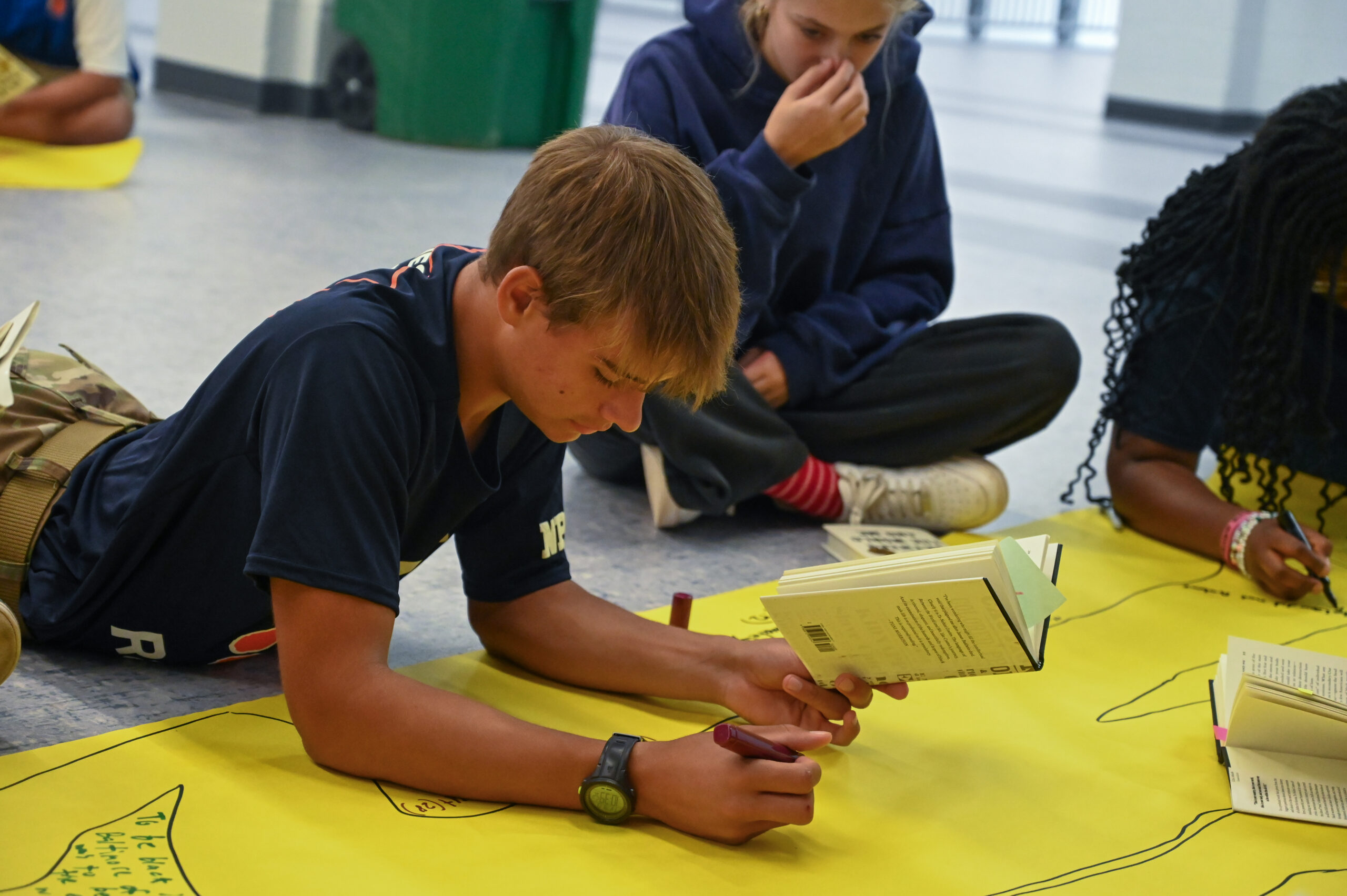
Sophomore Mekihi Gaines sees the class as a difficult but rewarding challenge.
“It’s a very rigorous course that challenges me to think outside the box when it comes to reading and writing. It’s pretty challenging, but if you’re willing to do it, it’s a great challenge,” Gaines said.
The class structure is different from other class structures as AP Seminar has been paired with AP World for a year-long program.
Due to the pairing, the class is separated into two different periods, with one section of 13 students and the other with 14. The first group meets on Mondays, Wednesdays and Fridays and the other meets on Tuesdays and Thursdays during fall semester. Students attend AP World History on the off days, and the schedules flip during spring semester so that each class receives equal seat time.
Sophomore Frannie Plaksin says this schedule can lead to some students having too much work.
“I feel like there’s a lot of work for the amount of time that we have, since we’re only there for three days a week. Some people only have it for two days, and there’s a lot of work,” Plaksin said.
Due to the atypical structure of the two classes, students are still figuring out how to keep track of assignments and keep themselves organized between AP Seminar and AP World.
AP World teacher Robert Olin says that the first days were spent ensuring that students had the correct schedules.
“We’ve had bumps. It’s the first time it’s ever been done. It’s the first time we have a year long AP class since we went to block scheduling. I think the students are still figuring out how to keep themselves organized,” Olin said.
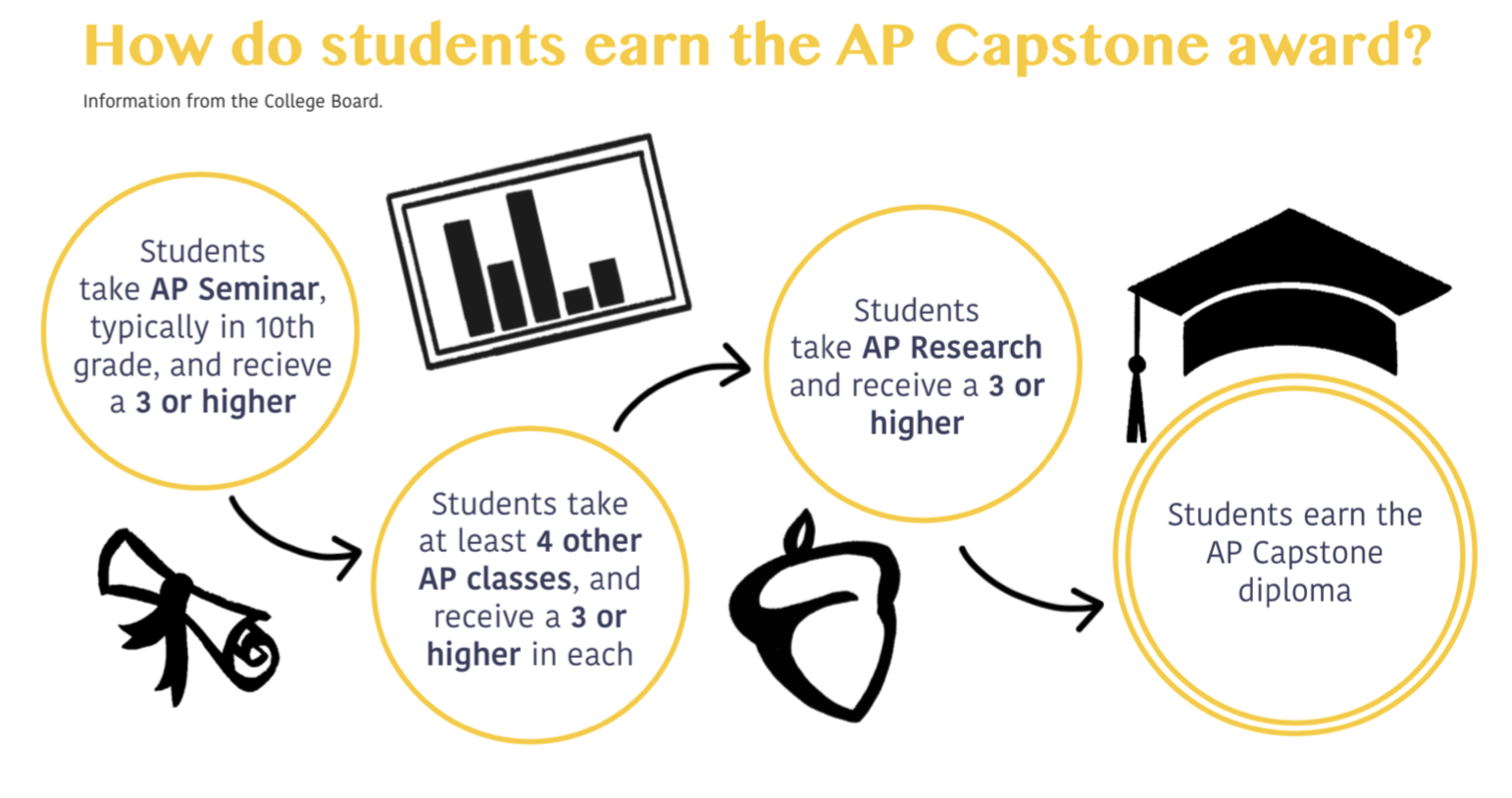
While the class counts as a 10th grade literature/composition credit, AP Seminar credit may not count for college credit at all schools. For example, the University of Georgia does not accept AP Seminar courses as a college credit. The AP Capstone program, first started in 2014, allows students to earn an additional diploma seal for completing both the AP Seminar and AP Research. Students have to score above 3 on the AP tests, as well as completing four additional AP classes in high school and earning scores above 3 on the tests. But the AP Research credit itself is not counted at UGA either.
Gaines still sees an incentive to take AP Research to complete the AP Capstone program.
“For me personally, because I want to be able to have multiple options of what colleges I want to go to, I feel like this would entice me to take (AP) Research along with Seminar instead of just Seminar,” Gaines said.
Clarke County School District is still working to offer AP Research at both high schools next year. Associate Principal of Operations Nathan Reincheld taught AP Research at his previous school. He thinks the class develops research skills students will need in college and beyond.
“AP Seminar and Research teach you some of those skills that you will not get in any other class, in prep for life, but also for college,” Reincheld said.
He recalls one of his AP Research students went to college and was able to use what he learned from the class for a research project.
“It’s a very rigorous course that challenges me to think outside the box when it comes
to reading and writing. It’s pretty challenging, but if you’re willing to do it,
it’s a great challenge,”
“I had a young man who was in my first year of AP Research. He went to Georgia College and State University, got into a history research program or class, and he had to do some sort of research project. He was the only one that knew how to do legitimate research. So this was really something that a lot of students have taken beyond high school and have applied it to their college,” Reincheld said.
Taylor-Howell also mentioned how her former instructor noticed the difference between students who have taken courses like AP Seminar and AP Research and those who haven’t through the level of writing and identifying key claims.
“My instructor that I had this past summer sits and scores AP exams during the summertime, and she said that when scoring student work, you can tell who’s taking AP Seminar and AP Research versus those who haven’t, because they have those skills to be able to effectively develop claims, defend those claims, and integrate evidence to support their argument. She said that it improves student success on future AP exams, and takes away the learning curve of getting to college and having the absence of this skill of research,” Taylor-Howell said.
Sophomore Angeles Olali hopes that more students will take AP Seminar because there is so much for people to learn from it.
“Just because it’s an AP class does not mean you should be afraid. It does not have to be looked at in a scary way. You can still do it and try it out,” Olali said.
Taylor-Howell also aims to increase enrollment in the class next school year.
“We’re hoping to grow the number of students who take the course next year, not just for the sake of numbers, but for the sake of building essential skills that students need in terms of research and argumentation and just communication,” Taylor-Howell said.