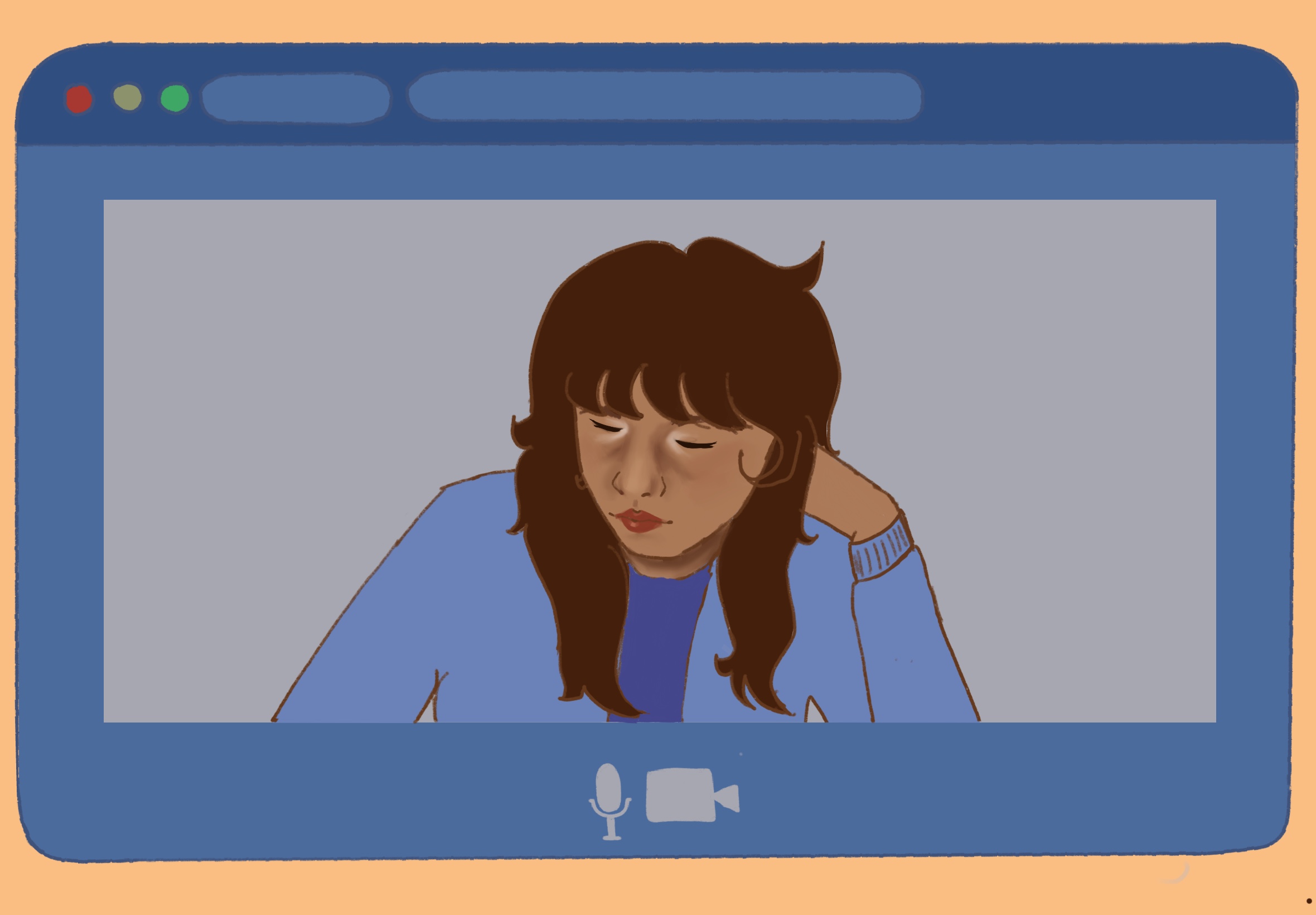
Optimizing online: the improvement of online classes
Although Clarke Virtual Academy’s overall student enrollment has decreased, Clarke County School District online students have increased their performance and passing rates. Enrollment peaked during the COVID-19 pandemic but has since stabilized. Those numbers are increasing once again.
“In recent years online education has seen a decrease in students. There were a lot of students and families that didn’t really understand what the expectations and requirements were for virtual learning, so we had a lot of people who were in the wrong place,” CVA director Dana Siemgund said. “Just because we were serving more students at that time doesn’t mean that was the best thing for our community. We’ve grown back close to that number, but our pass rates, performance and our activity rates are much better than they were. I’m proud of the enrollment that we’ve had and the success of our students.”
CVA started in 2020 and currently serves 300 students this semester, 180 of those strictly virtual. Cedar Shoals High School has 77 students taking online courses through CVA, which has 15 courses offered this semester including health and personal fitness, Spanish I and biology. These courses are subject to change every semester based on demand.
Georgia Virtual School (GaVS) is a statewide program partnered with many virtual schools that started in 2005. They currently serve over 19,500 students, offering over 120 online courses including 57 AP courses.
Cedar offers online courses through CVA and GaVS, but only two classes are offered in-person and virtually at Cedar: a literature class taught by teacher Brittany Blumenstock and a spanish course taught by teacher Ana Bonfante. These two courses can prove helpful for many students by allowing them to choose whether they would like to participate in an online course or a physical one.
During the pandemic CVA and GaVS paired up to create “virtual learning,” considering the difficult situation everyone was put into because of the isolation that COVID-19 produced. The effort proved helpful for many families. The “virtual learning” they created acted as a base for their later addition of genuine virtual courses and classes.
“The partnership we have with Georgia Virtual Schools was born out of the Covid pandemic during the shutdown. We called it virtual learning, but it really wasn’t. It was more like synchronous, remote learning and that really illustrated the need for something more robust and something that was actually better structured to offer actual virtual learning,” Siegmund said.
“It taught me a lot about organization and communication. Some of the same skills that students need to have to succeed, I think the teachers have to have the same skills. You have to be very organized. You have to be prompt. You have to give good feedback, timely and good feedback, respond to emails, quickly, communicate well and just be proactive,”
Blumenstock enjoys the technological aspects of teaching online, and she feels it can allow for more students to interact.
“I felt like a Twitch streamer. I liked that it was filmed and documented, that kids could work at their own pace. It wasn’t just that students could engage by raising their hand and speaking, but the chat was also an active part of my online classroom. That really opened up the doors for a lot of students who didn’t feel comfortable raising their hand talking, but were really active in the chat. I just enjoyed online teaching there, and then the opportunity opened up to continue online teaching,” Blumenstock said.
Online classes are flexible and can allow students to work out their own schedule. By allowing students to create schedules and reminders of when to do certain assignments, students can choose to do work when they can.
“Regarding time flexibility, we don’t operate in time and space like courses at Cedar Shoals. At a certain time the bell rings then you go inside a room. We don’t have that. That’s something that everyone who is interested in virtual learning should really consider. Our students can work any time of day, whatever works best for them. I have a handful of students that like to work at four in the morning. I don’t know why, but they’re doing well,” Siegmund said.
For other students, the flexibility offered by CVA allows them to pursue other specific interests. Siegmund recalls one student with a unique talent: frisbee golf.
“He would travel around the country Frisbee golfing. That was his thing but he wasn’t able to pursue that and go to school in person. So being able to help these kinds of atypical situations that virtual school can help people with is really rewarding for me,” Siegmund said.
By allowing students to work virtually anywhere, virtual classes proved very useful for people to work from anywhere they could get connected to the internet, lacking some core structures, but allowing students to work from a place of comfort.
“You can work anywhere there’s an internet connection. It lacks some structures, not having a teacher in the room, and that can be difficult for some people. I think we’ve all been in courses where, if we were allowed to work at our own pace, we would be more comfortable. Maybe other people in the room with you are not ready to move on,” Siegmund said.
Online learning requires strong communication skills. Students and teachers need to establish a strong connection and constantly communicate about assignments. Ana Bonfante, an online teacher of Spanish and German classes, says that teachers and students need to have similar communication skills.
“It taught me a lot about organization and communication. Some of the same skills that students need to have to succeed, I think the teachers have to have the same skills. You have to be very organized. You have to be prompt. You have to give good feedback, timely and good feedback, respond to emails, quickly, communicate well and just be proactive,” Bonfante said.
Creating different approaches to specific situations, online classes require communication between teachers and students. Without having the grace of seeing and using body language, online classes require better communication through technology.
“Unlike a brick and mortar school where you will have groups of students in your classroom, all in the same place, where you can disseminate information, I can make announcements. I can tell by body language if someone’s not following what I’m doing, or if they need extra help, those things are more of a challenge in a virtual space, because people aren’t in the same room and you can’t see their faces,” Siegmund said.